Overview
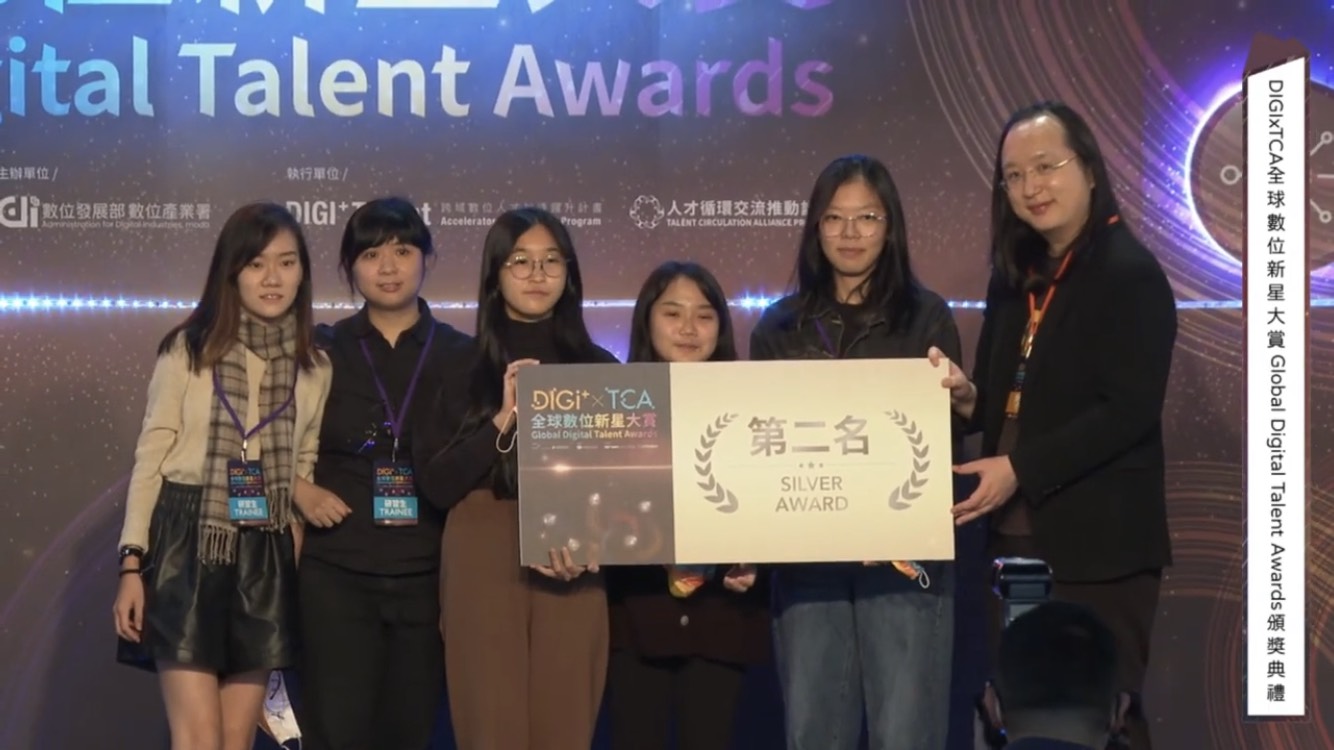
This project began with a technology — AR cardboard structure. By analysing use contexts and target audiences, we re-examined a positioning that leaned towards a professional tool, and moved the application towards children's education, where visual guidance for three-dimensional structure is genuinely needed. I worked on product positioning, the game mechanics and the experience flow, turning abstract packaging structure into a multiplayer board game that combines physical handling with AR feedback, delivering a working prototype and a public pitch. It went on to win the Silver Award at the 2022 DIGI x TCA Global Digital Rising Star Award.
Key outcomes
- A working prototype combining a physical board game with AR interaction.
- A viable answer to what an innovative learning tool for early childhood education could look like.
Role & contribution
- Co-designed the game rules and experience flow with a teammate.
- Ran user testing and adjusted the product positioning based on the feedback.
- Built the AR interaction models that carry the game's sense of immersion.
- Delivered the pitch at the final round.
Background & problem
The project's original brief was an "AR cardboard-structure tool" for packaging designers, using AR to show how a flat die-line folds up into a three-dimensional box.
Looking harder at the use context, the team concluded that practitioners with packaging design experience already hold that structural knowledge and already have professional tools for the job. A product that only visualises box structure would add relatively little.
Children still building their sense of space are a different matter. How a flat shape folds and assembles into a solid form is hard to grasp from static images alone. AR's animated presentation and immediate visual feedback have far more to offer there.
So the team repositioned the product, turning "AR cardboard structure" into an educational board game for children — using physical assembly, game missions and AR feedback to help them observe how flat and three-dimensional structures relate to each other.
Exploring the direction
Design challenge
How do you turn AR cardboard-structure technology into a game experience that children can understand, operate and keep coming back to?
Through the design process we kept returning to three questions:
- How do you turn the abstract process of unfolding and assembling a box into game missions that are easy to grasp?
- How do you make AR provide the visual hints and result feedback that are genuinely needed, without adding operational burden?
- How do you combine racing, quizzes and multiplayer interaction to raise children's sense of involvement?
Design goals
- Make the transition between a flat die-line and a solid box visible.
- Lower the barrier to understanding box structure through physical handling plus AR feedback.
- Fold the structural knowledge into game missions rather than presenting it as one-way teaching material.
- Support several players at once, creating interaction between children and their parents or peers.
Design principles
- Physical handling first, AR feedback second: children identify, combine and manipulate the physical pieces first, then use AR to see the structural animation or the result of a mission — so the screen never replaces the hands-on part.
- Simplify the interaction, lighten the attention load: fewer complex AR gestures and fewer interface layers, so children can put their attention on assembling boxes and completing missions.
- Turn the learning content into a game goal: rather than explaining packaging structure directly, use racing, quizzes and level design so children meet spatial-structure concepts while completing missions.
Core features
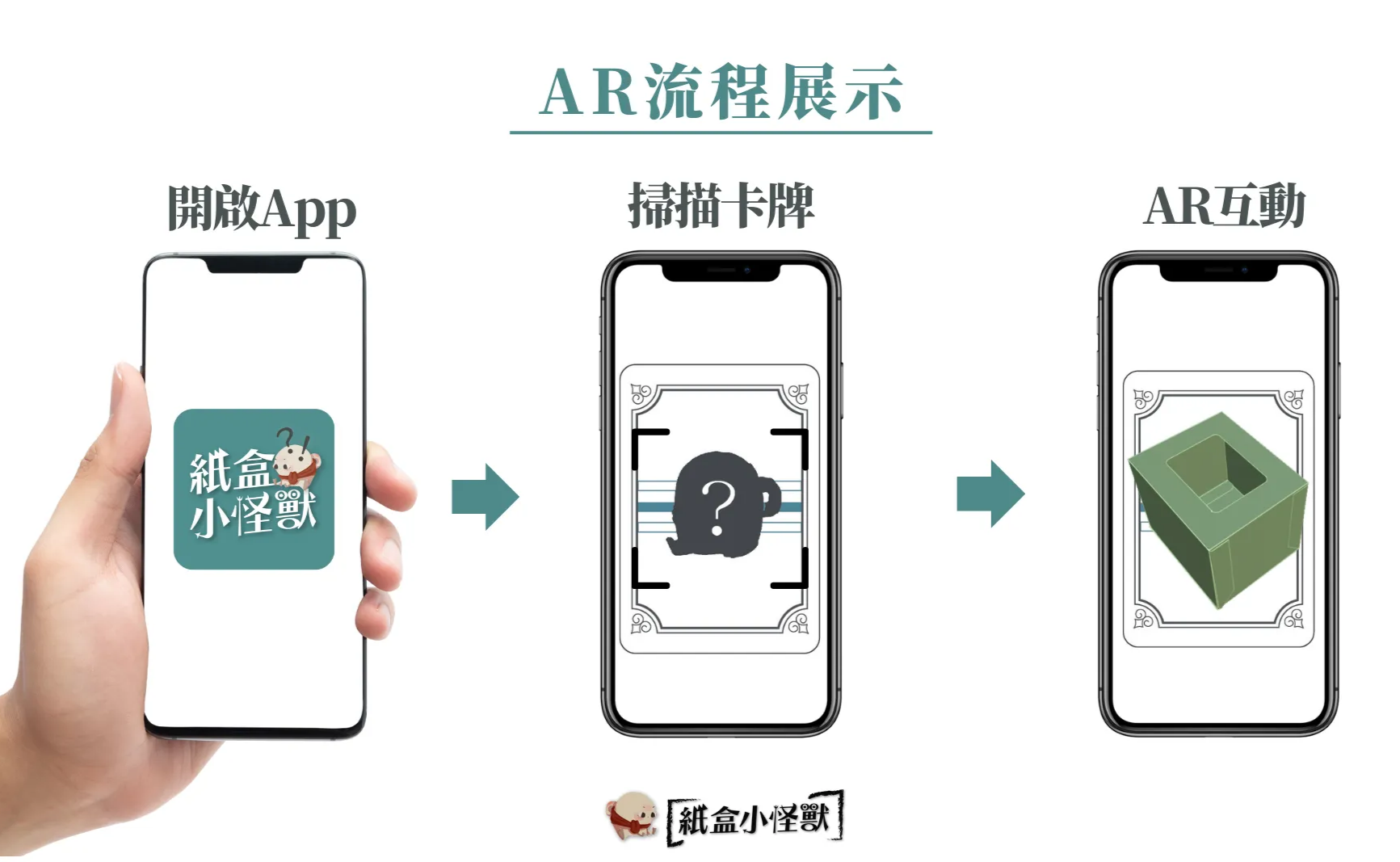
- AR structural feedback: scan a specified box or card to watch it assemble from flat to solid.
- Gamified missions: racing, knowledge quizzes and levels guide children to recognise different box structures.
- Multiplayer mode: supports 3–6 players, encouraging families or peers to discuss and complete missions together.
Product design
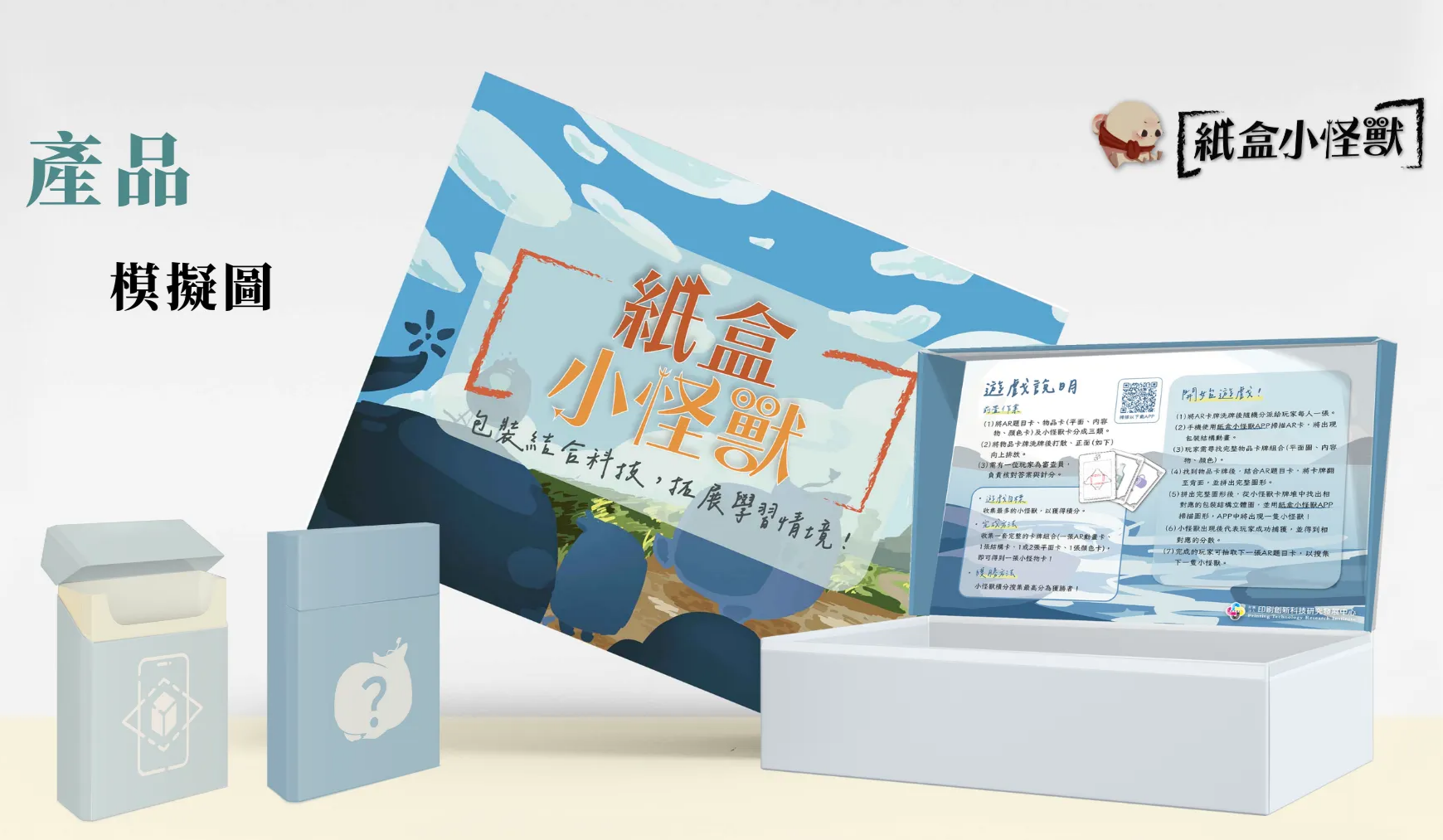
The visual direction uses bright colour and character design to take the professional, complicated edge off the packaging-structure content. We also simplified the AR scanning and viewing flow as far as we could, so the device stays an aid for feedback rather than becoming the main thing you operate.
Demo
Outcome & reflection
Outcome
- Produced a working AR board game prototype along with app mockups.
- Demonstrated what "education × play × technology" can look like, opening a new application for AR.
- Won the Silver Award at the 2022 DIGI x TCA Global Digital Rising Star Award.
Reflection
This project taught me that product development should not start from a given technology alone. It also needs a fresh look at whether the intended users genuinely have the need, and at which use context the technology creates clearer value in.
Given the development timeline, we moved fast on contextual reasoning, reference cases and prototyping, and never ran full preliminary research or formal testing with 6–10 year-olds. The result therefore validates the product concept and the feasibility of the technical integration, but does not yet prove any learning effect. If there were a next stage, I would start by observing where children actually struggle to understand box structure, then test the game rules, how well the AR interaction is understood, and the difference in experience with and without AR feedback — in order to validate the positioning further.