00
Overview
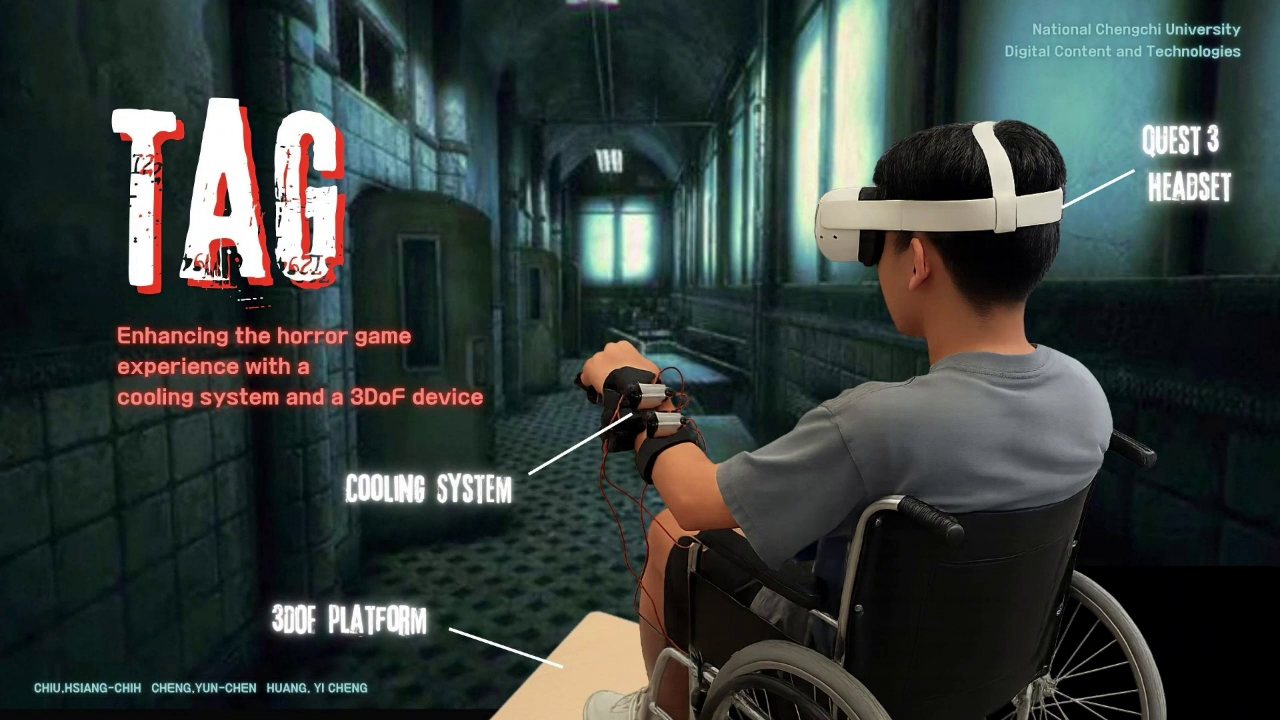
A VR horror escape experience combining hand cooling with foot vibration, turning in-game events into physical feedback the player can feel.
What I was responsible for
- Building the hand-cooling mechanism and testing how to mount it
- Building and assembling the 3DoF foot vibration platform
- Building the Unity VR scene and setting up the in-game events
- Integrating haptic feedback with those game events
- Testing the hardware prototype and troubleshooting it
Team
4 people
Timeline
Feb 2025 – Jun 2025
Outcome
A complete, playable prototype
Tools
Unity, OpenXR, Meta Quest 3, Arduino, Peltier thermoelectric modules, servo motors, Figma
01
Demo
02
Design challenge
The project had to deliver a genuinely playable VR scene and a set of body-feedback devices on a small budget and with limited hardware.
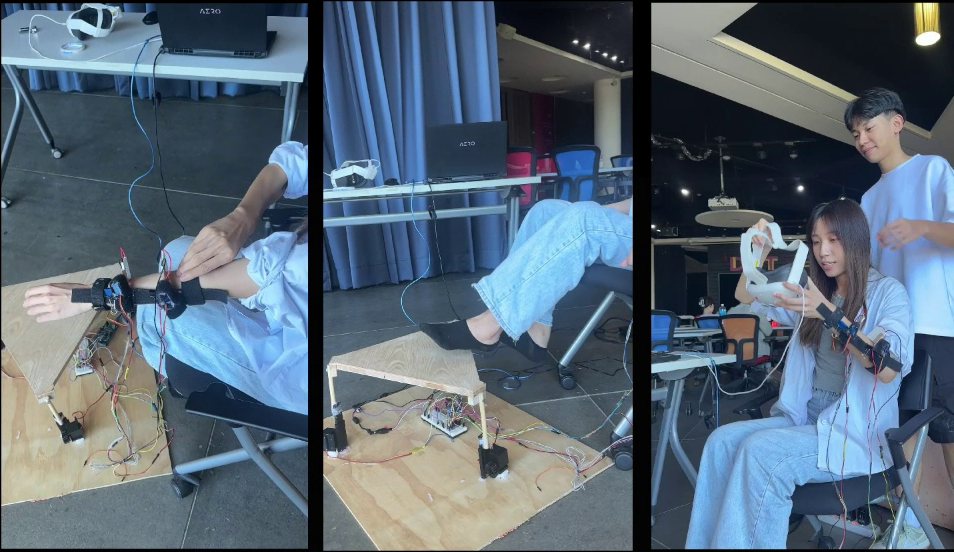
The hand module needed to stay firmly in contact with the skin, and the foot platform had to balance the direction of the vibration, the stability of the rig and the player's safety. Through repeated rounds of assembly and testing, I gradually tuned how the devices were mounted, how the cabling was routed, and when the feedback fired.
03
What we built
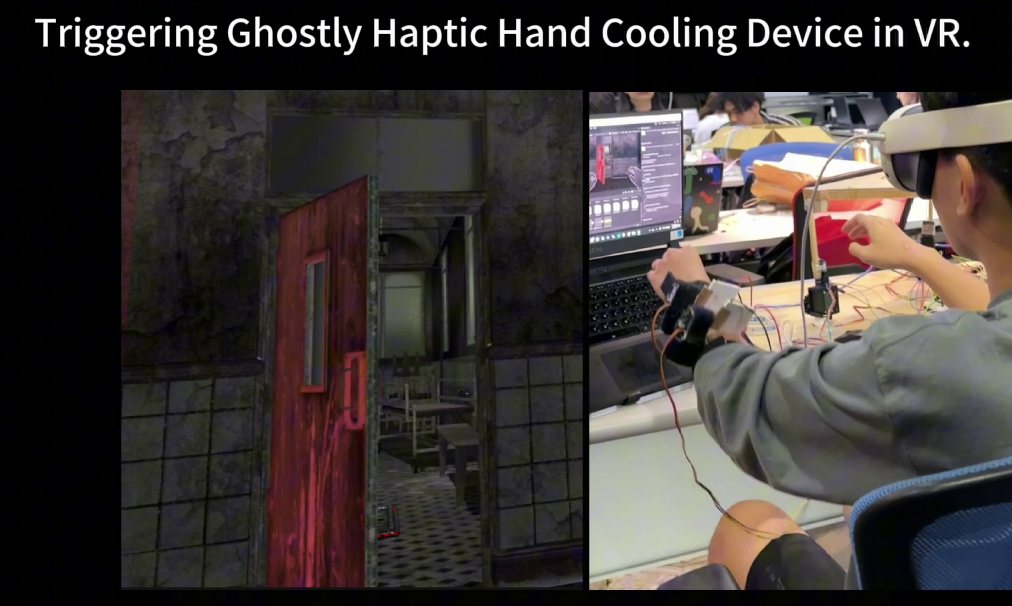
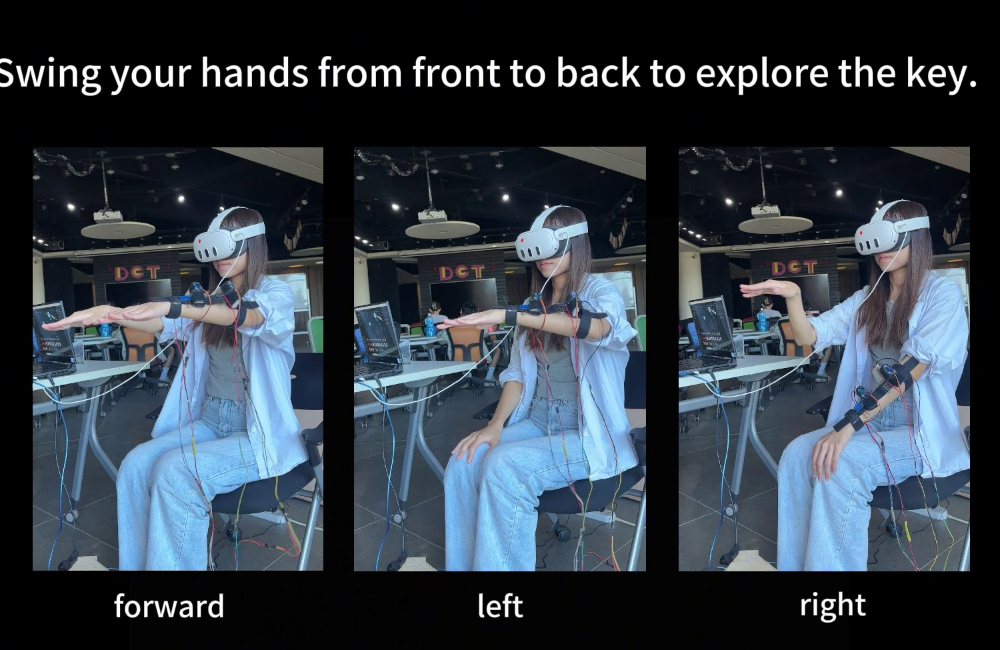
- Hand-cooling module: simulates the cold, pressing contact of a ghostly hand.
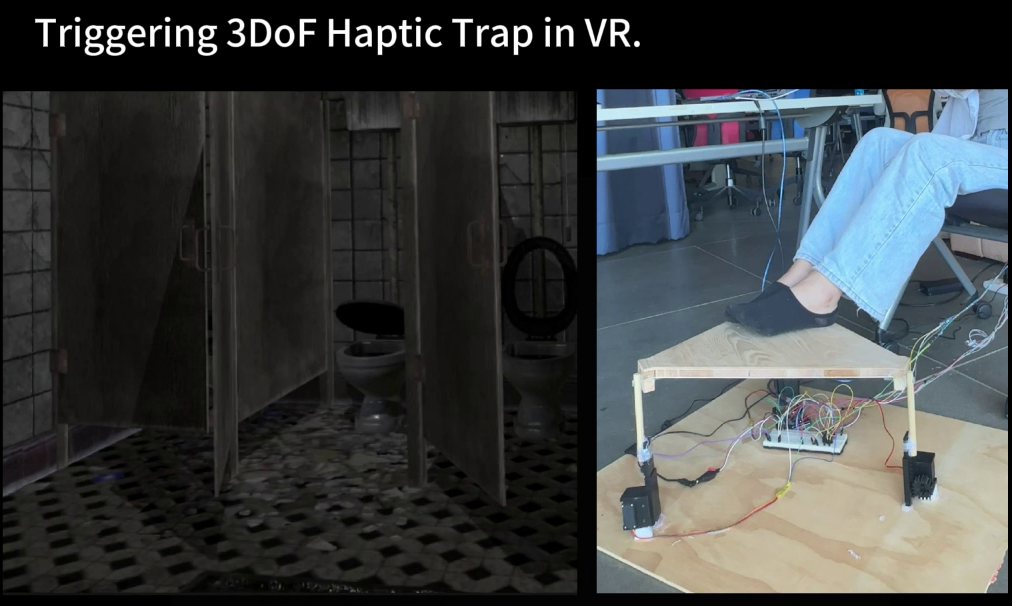
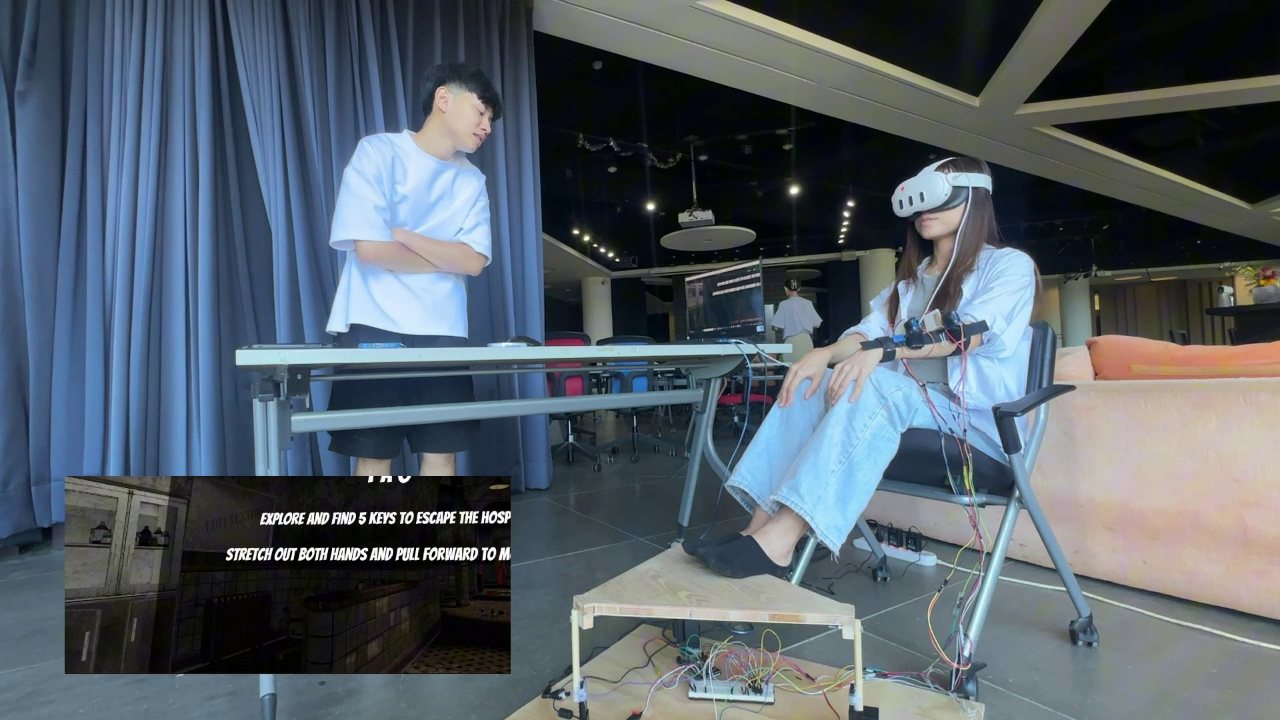
- Foot vibration platform: three servo motors produce variation in direction and intensity.
- VR scene: an abandoned hospital, with a key hunt and scripted horror events.
- Complete prototype: a VR horror escape experience people could actually play.
04
Takeaways
An interactive experience is not made of picture and sound alone. How the hardware feels, when the feedback fires, and whether it is safe to use all shape how players read the experience as a whole.