Overview
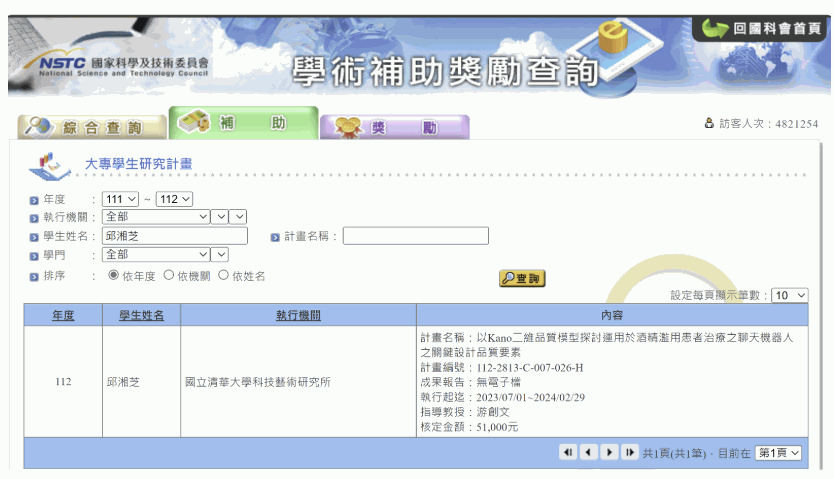
More than seven in ten patients with alcohol dependence lose their motivation to continue treatment after leaving the clinic. To extend care beyond the consultation room, I developed a set of product features based on physician interviews and secondary research, then surveyed patients and their caregivers using the Kano two-dimensional quality model. The result was a prioritised order for feature development that the engineering team could work from. The project also received a 2023 NSTC Undergraduate Research Grant, and the findings won the NSTC Undergraduate Research Creativity Award.
Key outcomes
- Collected 11 patient questionnaires and 2 caregiver questionnaires (100% response rate), supplemented with in-depth interviews.
- Used the Kano model to sort features into must-be, one-dimensional, attractive and indifferent qualities, and derived a design priority order from that.
- Combined the patient and caregiver interviews into chatbot design recommendations that sit closer to the actual needs of treatment.
Role & contribution
- Research design and execution: helped define the research framework, reviewed the literature and compiled a feature inventory of existing chatbots.
- Questionnaire development and iteration: wrote and repeatedly refined the two-way Kano questionnaire, including the scenario descriptions and item wording.
- Data collection and analysis: recruited participants in partnership with clinicians, consolidated the returned data, and analysed it in depth using the Kano model and satisfaction coefficients.
- Design recommendations and final report: wrote the closing research report, setting out the prioritised feature list and the UX design direction.
Background & problem
This was a research project I carried out as a research assistant at the Ubiquitous Computing Lab, under the supervision of Professor Chuang-Wen You.
Research topic: Investigating the critical design quality attributes of a chatbot for the treatment of alcohol misuse, using the Kano two-dimensional quality model
Project number: 112-2813-C-007-026-H
Clinically, patients with Alcohol Use Disorder (AUD) tend to need long-term, easily accessible support. Because a chatbot is reachable 24 hours a day, it can supplement clinical treatment — which is why it has been drawing more attention.
Most existing therapeutic chatbots, however, are specified in a largely feature-driven way, without a deep understanding of which features patients and caregivers genuinely want and which they could take or leave. After interviewing psychiatrists and hepatogastroenterologists, this study focused on four core observations:
- Continuity of treatment: physicians consistently reported that "consultations are short and patients get no day-to-day follow-up", which drives relapse rates up.
- Medication management: many patients also live with other chronic conditions, so their medication regimens are complex; reminders and personalised scheduling are an urgent problem.
- Emotional management: psychological stress and negative emotions often make patients abandon treatment part-way through, so they need continuous monitoring and empathetic responses.
- Communication support: caregivers often do not know "when" or "how" to step in, which leads to family conflict and a sense of futility.
On that basis, we set out to develop the features in more detail and use the quantitative method of the Kano model to systematically identify the priority needs held by patients and caregivers, so a digital treatment tool could be built on top of them.
Research question & goals
The question
How can a systematic method give us an accurate picture of how AUD patients and their caregivers prioritise what they need from a therapeutic chatbot?
- Which features do patients want, and which would raise their engagement?
- Which matter more to caregivers, strengthening the support they can offer during treatment?
- And which are take-it-or-leave-it — indifferent qualities whose absence causes no dissatisfaction?
Research design & process
Process overview
1. Literature and market review
- Sources: papers from medicine and addiction treatment, WHO open data, and white papers on AI chatbots
- Scope: analysed the interventions commonly used clinically with alcohol-dependent patients; surveyed medical chatbot cases in Taiwan and abroad, covering psychological counselling support, medication reminders, community interaction and more; and drew on Mohd Javaid et al.'s review of ChatGPT applications in healthcare to derive the technical modules a chatbot might offer
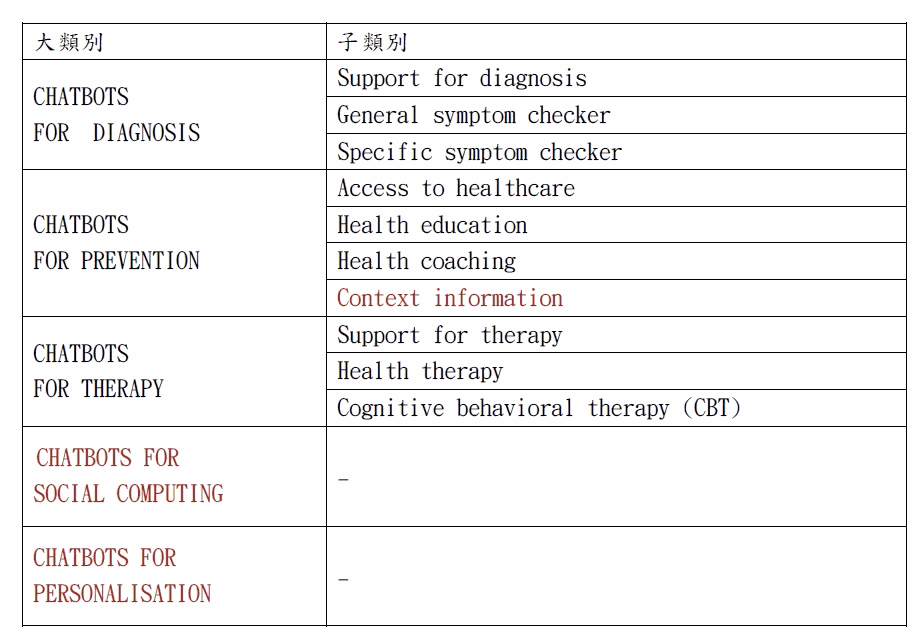
- Combining the literature with the features of existing support chatbots, I traced how treatment for alcohol misuse and addiction-reduction technology have developed, and formed a first draft of the design quality attributes. Those attributes were then categorised and used as the questionnaire's structure. The figure at right shows the structure derived from the literature (the items in red are newly added categories).
2. Designing and iterating the two-way Kano questionnaire
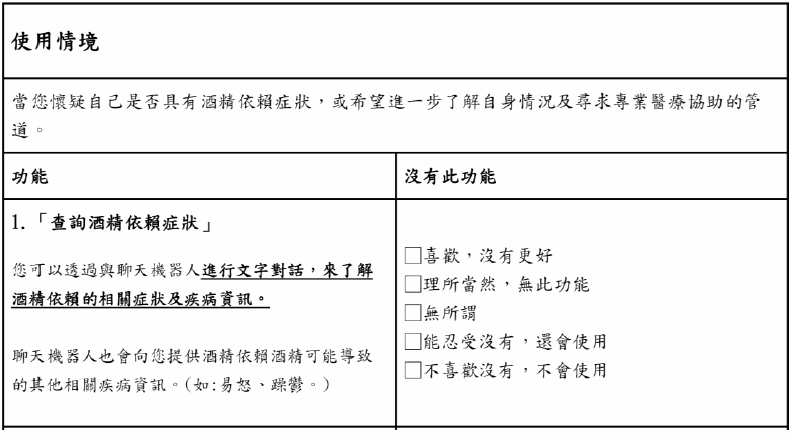
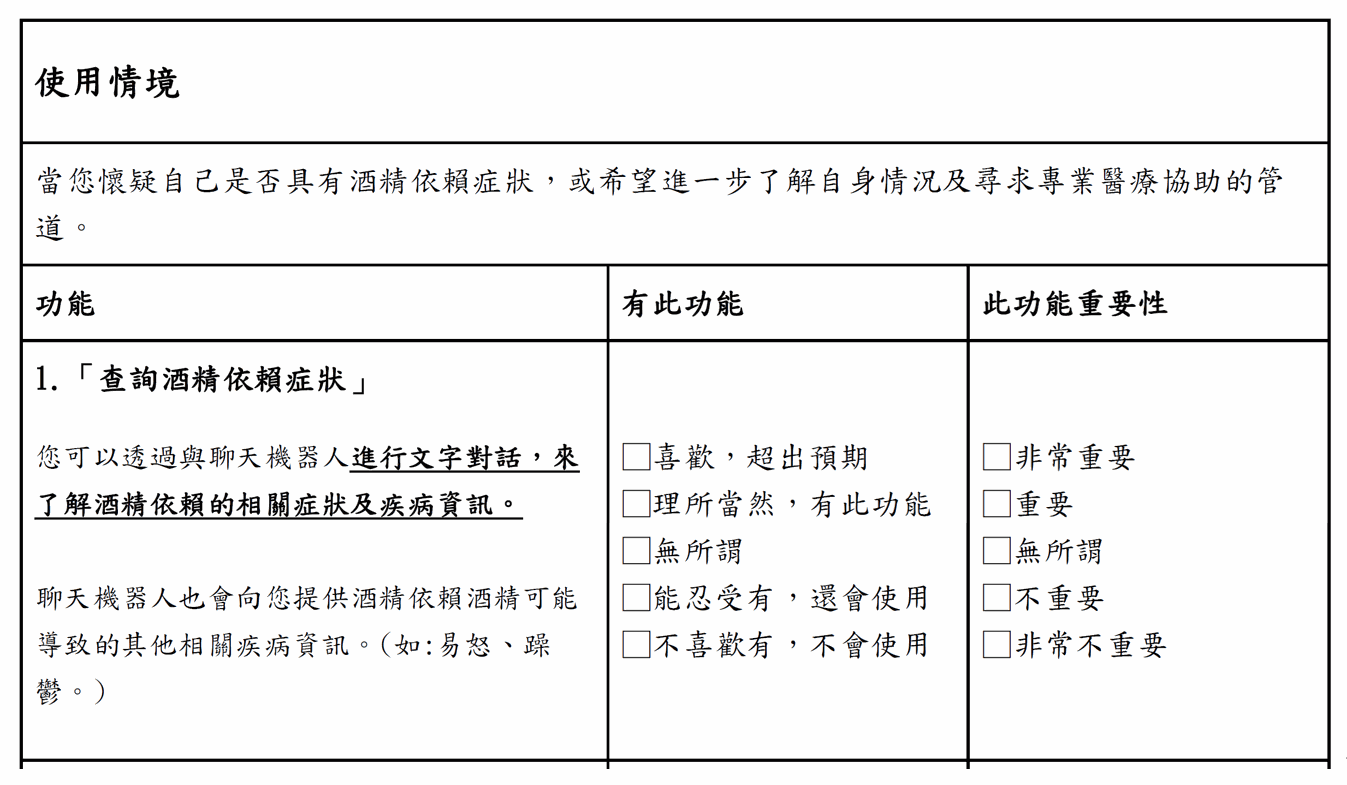
- A two-way design — a functional question ("if the chatbot had this feature…") paired with a dysfunctional one ("if it did not…") — to establish whether a feature reads to patients or caregivers as must-be (M), one-dimensional (O), attractive (A) or indifferent (I)
- Alongside the Kano items, a Likert scale let participants rate each feature's importance themselves
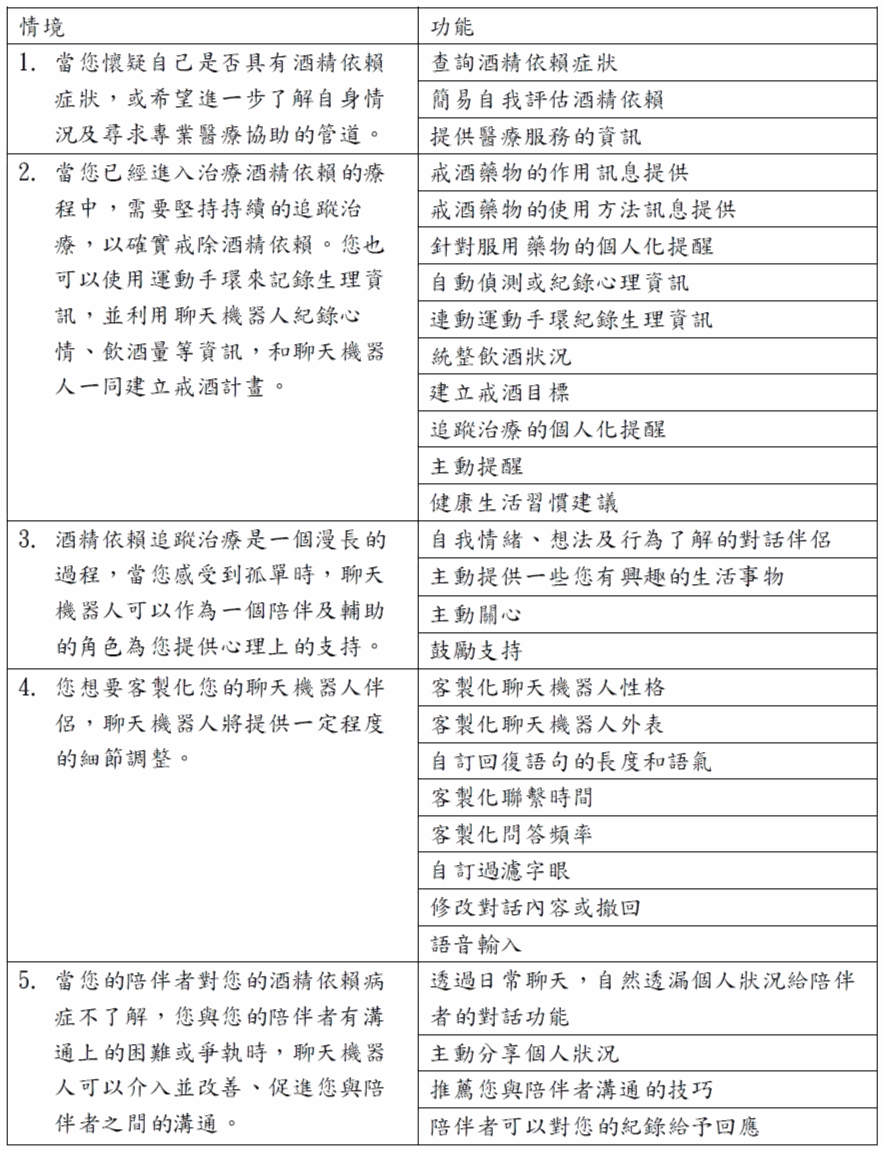
- Distinct scenarios (initial assessment, treatment follow-up, caregiver support) let participants judge whether a feature was necessary or desirable within a concrete situation.
- Patient-facing treatment needs and caregiver-facing communication and status-awareness needs were emphasised separately, to get a sharper read on the difference between them.
- Five scenarios in total (such as "suspecting you are alcohol-dependent", "needing ongoing treatment follow-up" and "supporting someone as a caregiver") helped participants picture concretely what difference the feature would make if the chatbot offered it.
3. Research ethics review
Because people with alcohol dependence and those who care for them are a vulnerable population, the study was submitted to and approved by the Institutional Review Board of Taipei City Hospital before it formally began, to ensure participants would come to no harm.
4. Fielding the questionnaire, plus in-depth interviews
Working with clinicians, we explained the study to eligible patients and caregivers at the clinic and obtained written consent. The questionnaire took around 40 minutes, and we ultimately collected responses from 11 patients and 2 caregivers, each followed by a 40–60 minute interview.
5. Analysis
Once the responses were in, I first constructed the Kano two-dimensional quality model, then applied the customer satisfaction coefficient to establish which features deliver the greatest gain in satisfaction and the greatest reduction in dissatisfaction — the basis for prioritising design and development.
Participants and recruitment criteria
Patients
- Aged 18–65, diagnosed with alcohol dependence per DSM-5;
- No other illicit substance misuse;
- Able to understand the purpose of the study and sign the consent form.
- Exclusion criteria: serious internal medical conditions, severe psychiatric illness, or an education level or cognitive function that would prevent participation.
Primary caregivers
- Aged 18–65, no illicit substance use;
- Able to understand the purpose of the study and sign the consent form;
- Able to offer the caregiver's perspective, so that needs around extended treatment and social support could be assessed.
- Exclusion criteria: serious internal medical conditions, severe psychiatric illness, or an education level or cognitive function that would prevent participation.
Analysis & how the findings were applied
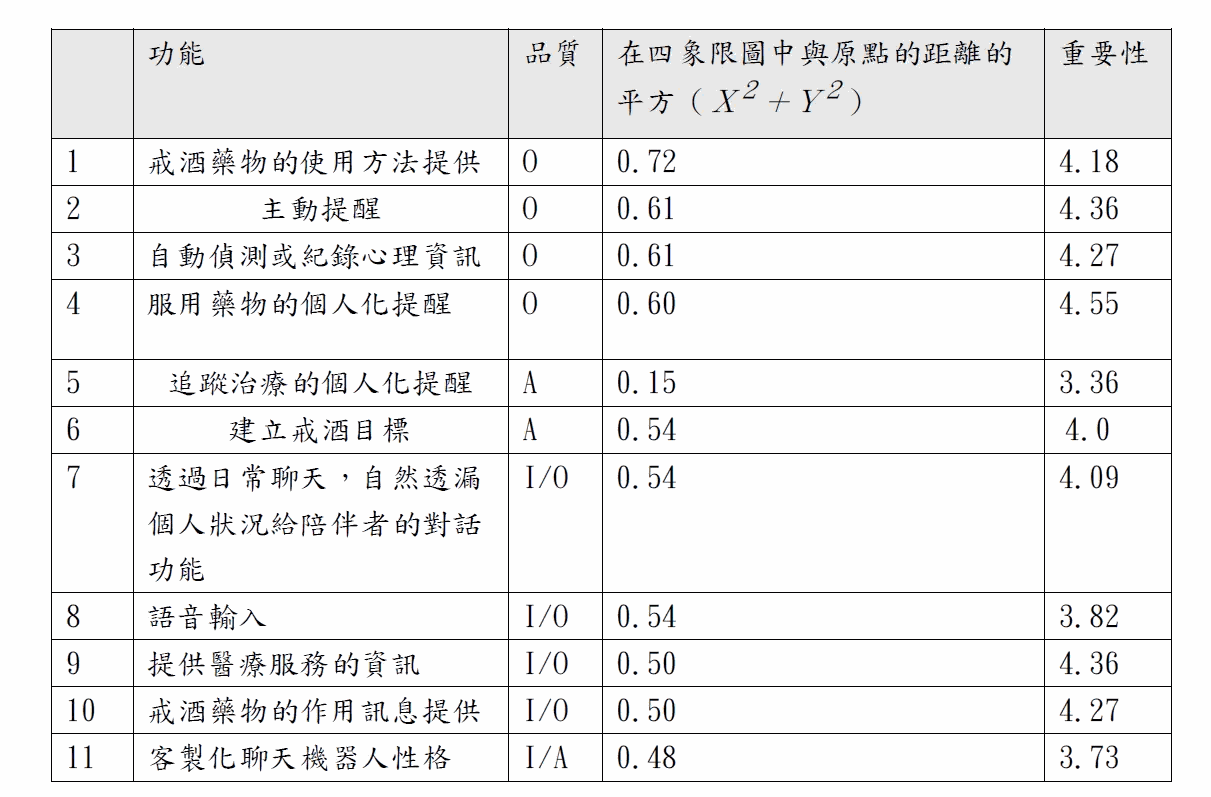
Analysing the responses placed each feature into one-dimensional (O), attractive (A), indifferent (I) or must-be (M). Combining that with the satisfaction and dissatisfaction coefficients and the self-rated importance scores produced the final development priority order.
Key insights
What patients need most is an extension of the clinic
One-dimensional qualities: guidance on using anti-craving medication, automatic detection of emotional state, and proactive reminders all raise patient satisfaction noticeably; their absence readily causes dissatisfaction.
Attractive qualities: personalised follow-up reminders and setting sobriety goals deliver a sense of delight and encourage patients to stay in treatment for the long run.
Caregivers care about communicating effectively
"Suggested techniques for talking to the patient" and "seeing the patient's current state in real time" are one-dimensional qualities (O) — done well, they raise caregiver engagement substantially.
Features for offering encouragement or feedback, if the experience is smooth, leave caregivers feeling they were actually able to help.
Customisation is not the deciding factor
Most patients were older and had little interest in customising the interface's appearance or the character's personality — an indifferent quality.
Voice input, by contrast, was better received for its convenience, and could reasonably sit as a secondary value-add.
Impact on design decisions
How the research shaped design and product decisions
- Build the must-be and one-dimensional features first — medication guidance, mood logging, reminder mechanisms — since these lift the treatment success rate fastest.
- Caregiver features can ship in v1 as voice input plus a few simple encouragement templates, enough to draw family members in.
- More advanced customisation and visual styling can wait when resources are tight, so that the core features are properly finished first.
Outcome & reflection
Reflection: This project gave me a real feel for combining quantitative research with UX strategy, and a clear sense of the ethical considerations and recruitment difficulty that come with research in healthcare and addiction. The sample was small, but the Kano model still let us make a relatively rigorous call on feature priority, and made the development that followed more efficient. With more time, I would want to recruit more caregivers and invest more in in-depth interviews and prototype testing, to check how stable and how useful these conclusions really are.